What I'd Want to Know Before Buying a Portable Seat
The honest questions worth asking before you buy a portable seat — weight, size, stability, comfort and when it's simply not the right tool.
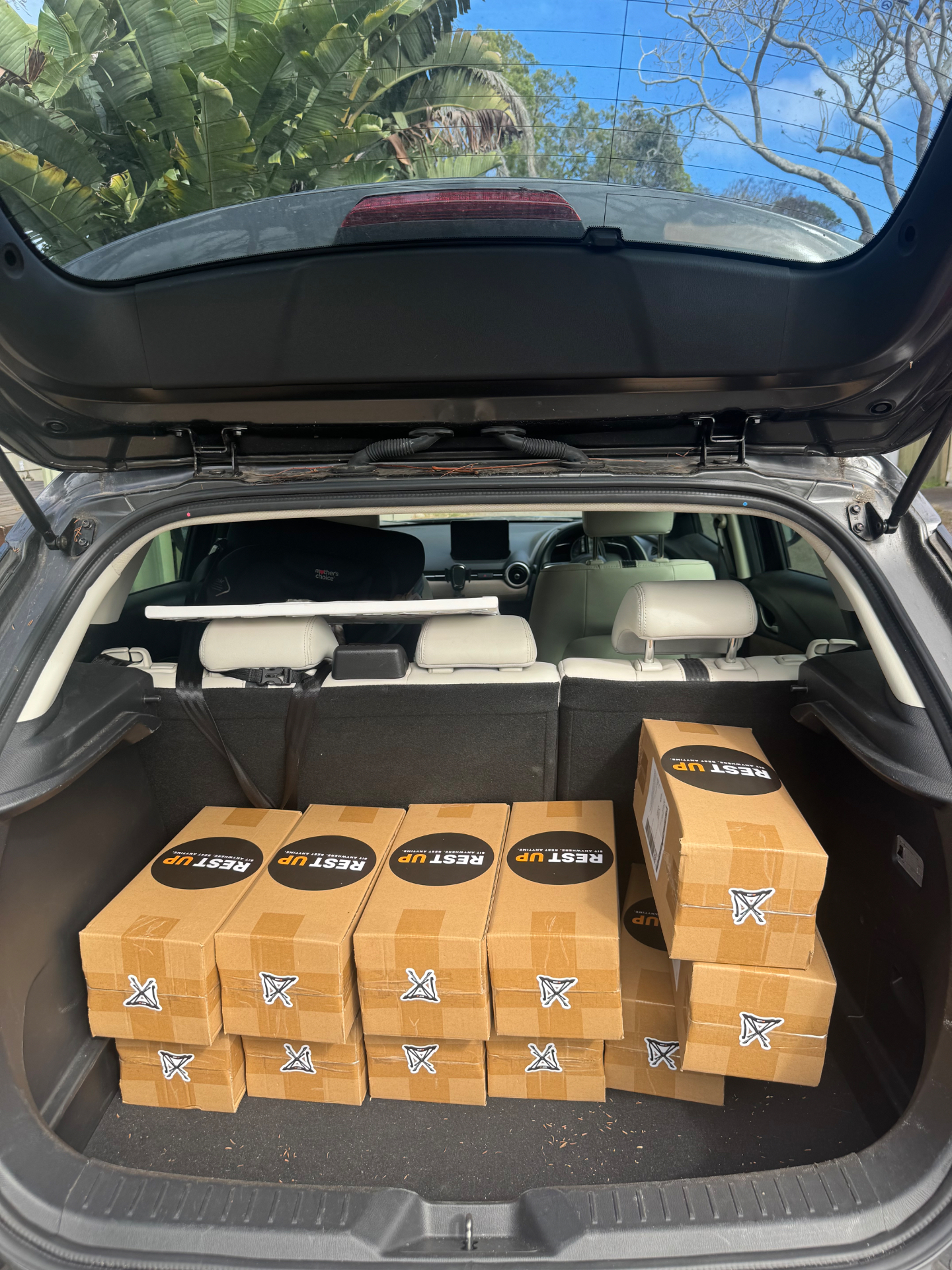
If you're thinking about buying a portable seat, you've probably already been burned by one. Maybe it was a camp stool that wobbled, a folding chair that never left the car boot, or a cheap tripod seat that pinched your fingers the first time you closed it. Before Restup existed, I went through all of those. This post is the list of questions I wish someone had answered for me before I spent money on them.
I'll be honest throughout, including about where Restup isn't the best choice. A portable seat is a small purchase, but it's only worth it if you actually carry it. Everything below comes back to that one test: will this be with you when you need it?
1. How heavy is it, really?
Weight is the first thing that decides whether a seat leaves the house. Anything over about two kilos starts to feel like luggage. You'll take it to the footy once, then it lives in the garage.
Restup weighs 1.4 kg. That's not the lightest seat on the market — some ultralight stools come in under a kilo — but those usually save weight by dropping legs, shrinking the seat, or using thinner tubing. I chose a little more weight in exchange for four legs and a full-size seat, because a seat you don't trust is a seat you don't use.
A good way to judge it: 1.4 kg is roughly a full one-and-a-half-litre water bottle. If you'd carry that in your bag for the day without thinking, you'll carry Restup.
2. Will it actually fit in my bag?
Folded size matters more than most product pages admit. A seat that's light but awkwardly long still won't fit in a backpack, and holding it in your hand on a train gets old fast.
Restup folds down to about the size of a large water bottle and goes into its own carry bag with a strap. You can sling it over your shoulder, clip it to a bag, or slide it in beside a laptop. That was a non-negotiable for me, because the whole point is to have it with you before you know you'll need it.
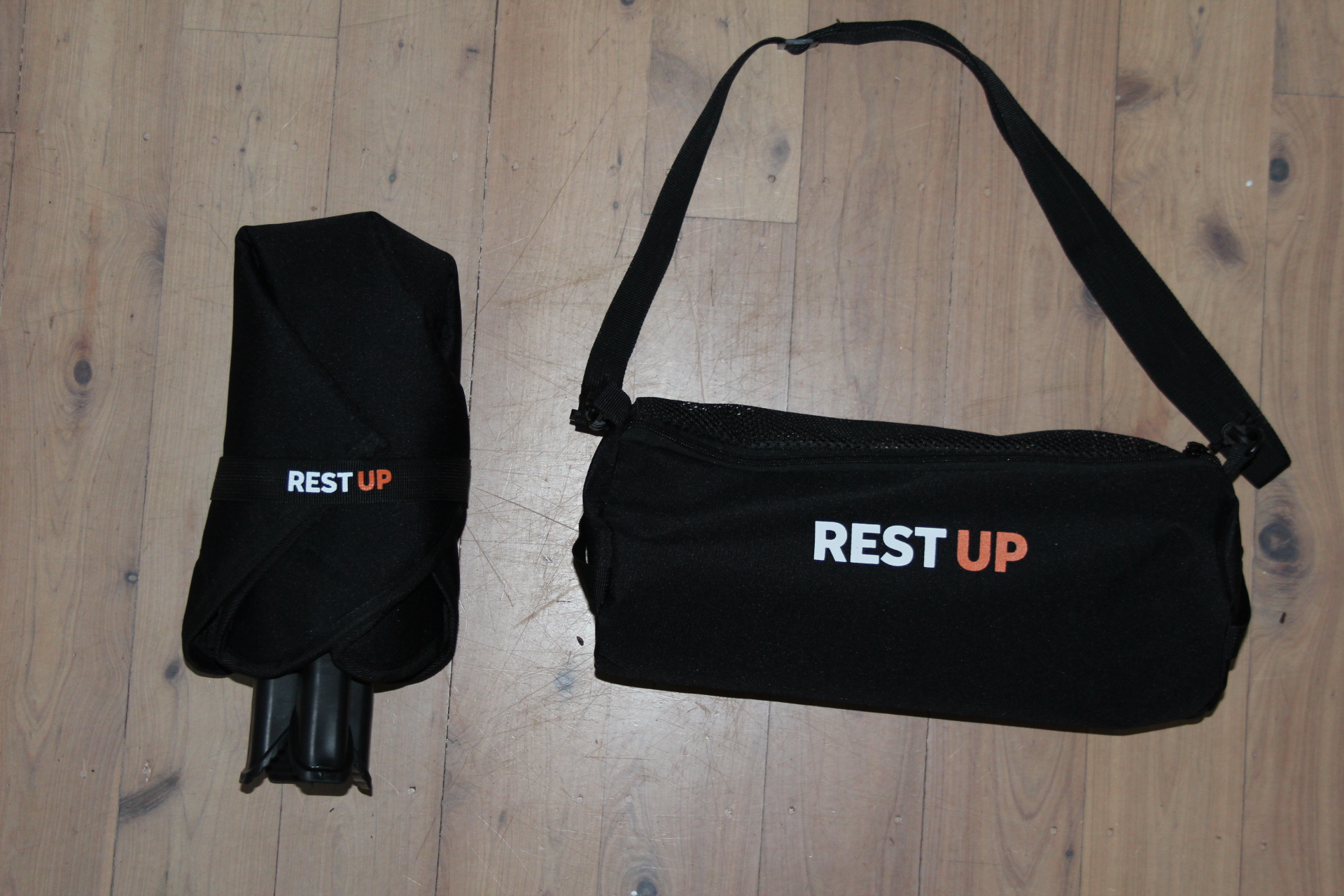
If you're commuting, check your bag's side pocket or main compartment against that size. If you're heading to a festival, check the event's rules on seating before you go — most allow compact seats, some don't.
3. Is it stable, or am I going to tip over?
This is the question that matters most and gets answered least. Three-legged tripod stools are popular because they're light and simple, but they rely on you balancing. Lean back or shift sideways and you feel it immediately.
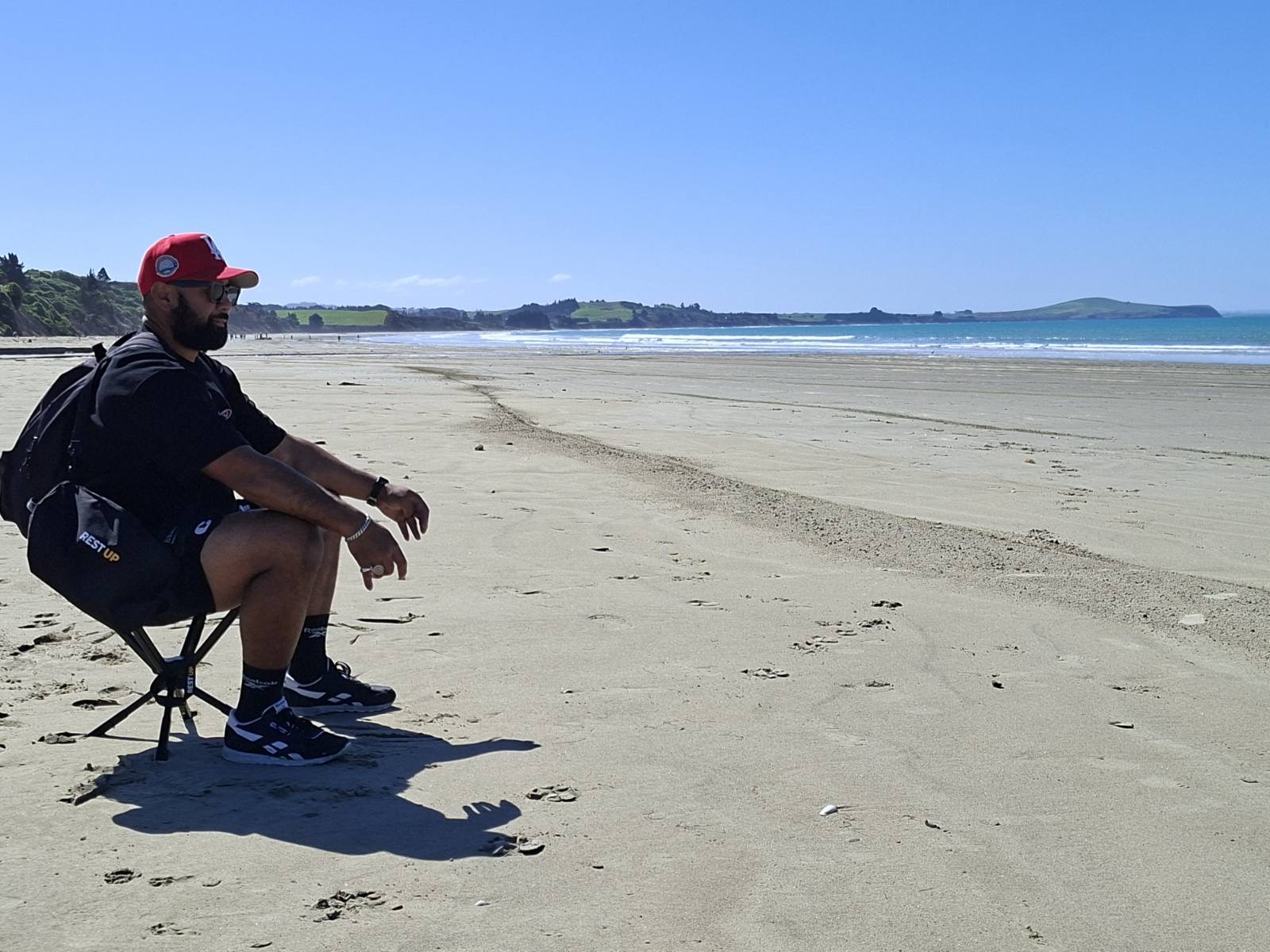
Restup uses a four-legged X-frame with wide feet. Four contact points means it sits flat on platforms, footpaths, grass and sand, and you can relax on it instead of holding yourself steady. On really soft or uneven ground, any seat will sink a little — wide feet help, but give it a second to settle before you sit fully.
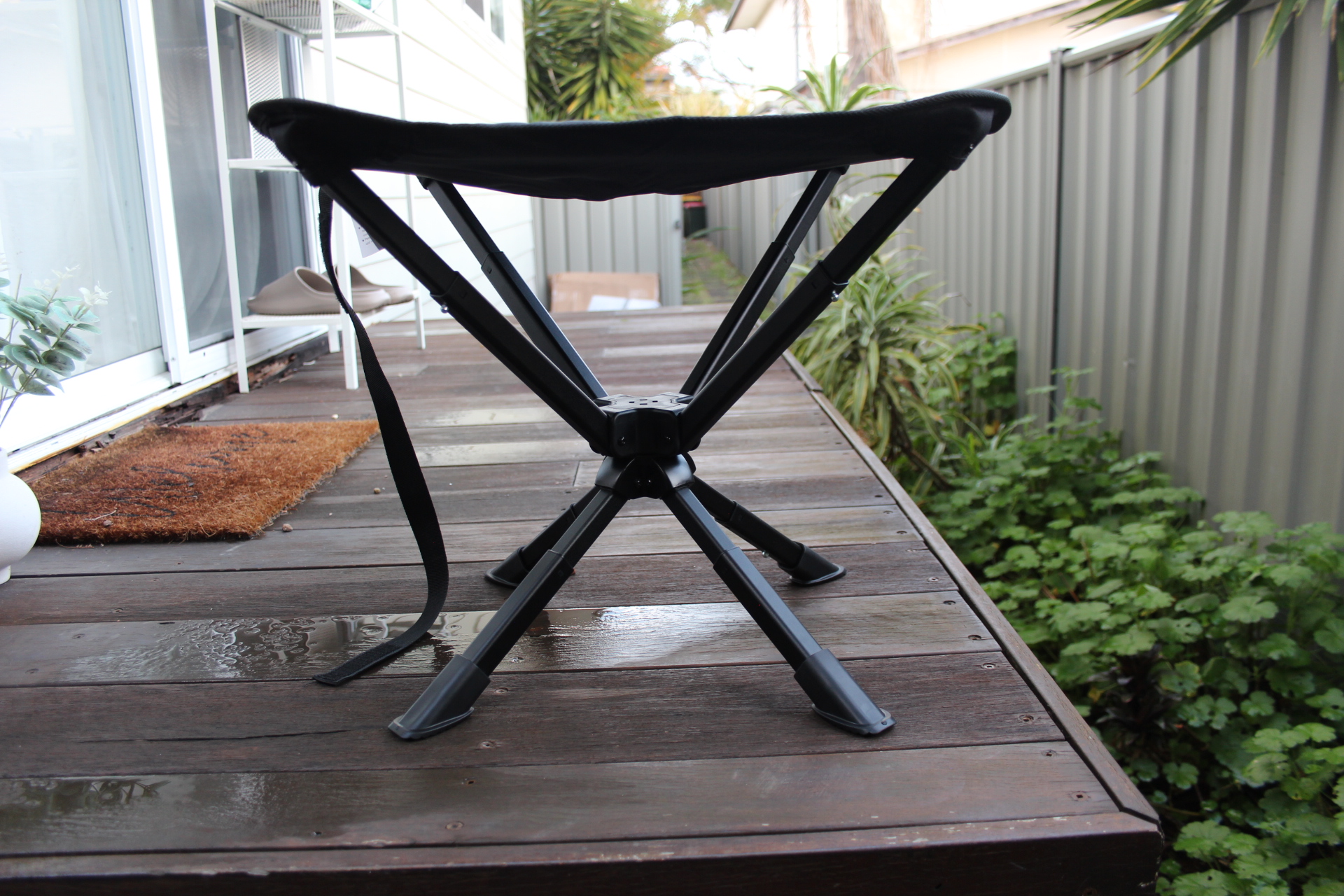
If stability is your main concern, that's the single biggest reason to choose a four-leg design over a tripod. It's also why I didn't go lighter.
4. What does a 150 kg rating actually mean?
Load ratings get thrown around a lot. Restup is rated to hold up to 150 kg, which covers most adults comfortably with a margin to spare.
What it doesn't mean is that you should stand on it, jump onto it, or use it as a step. It's a seat. Sit down normally and it'll do its job. Drop onto it from a height every time and any portable frame will wear faster.
If you're near the top of that range, it's worth knowing that sitting square in the middle of the seat spreads the load best.
5. Is it comfortable for more than five minutes?
Plenty of tiny stools are fine for a quick rest and miserable after ten minutes. The seat is usually the problem: too small, too hard, or a sagging pouch that pushes your hips together.
Restup has a full-size sling seat in a supportive woven fabric that holds its shape, plus a 360° swivel so you can turn to talk to someone or follow the play without shuffling the whole seat around. It's comfortable for long waits, sideline sessions and festival sets. It isn't a recliner — there's no backrest — so if you need back support for hours, a full camp chair will suit you better.
6. How long does it take to set up?
If it takes more than a few seconds, you'll stand instead. That's just human nature.
Restup opens in one motion: pull it out of the bag, open the legs, and it locks with a click. Packing it away is the same in reverse. There are no loose parts and no tools. You can watch it in the setup video on the homepage to see exactly how quick it is.
7. Where is it genuinely useful?
The places I reach for it most are the ones where seating should exist but doesn't. Train platforms and long commutes. Kids' sport on a Saturday morning. Festivals and outdoor gigs. Airport gates and travel days. Fishing off a jetty or a quiet riverbank. Queues for concerts, sales or the coffee van. Hiking stops where every log is wet.
If any of those sound like your week, there's a page for each with more detail: commuting, sport days, festivals, travel, fishing and outdoors, and hiking. The links are at the bottom of this post.
8. When is it not the right choice?
I'd rather you buy the right thing than the wrong one from me. Restup probably isn't for you if you need back support for long stretches, if you only ever go places with plenty of seating, or if you need a seat that weighs almost nothing for multi-day hiking where every gram counts.
It's also not a medical or mobility aid. If you need a seat for health reasons, please talk to a professional about something designed for that purpose.
9. What happens if something goes wrong?
Restup comes with a 1-year warranty. Restup is run by me from Australia, so if something isn't right, you're emailing the person who actually cares about fixing it at support@restupofficial.com. The shipping, returns and FAQ pages cover the details, and every question I get feeds into making the next run better.
10. Is it worth the money?
The launch price for the first 100 is $49.99 AUD, against a normal price of $59.99. That includes the carry bag and the warranty. Compared with the well-known names in this space, it's at the more affordable end, while keeping four legs, a swivel seat and a full-size sling.
Whether it's worth it comes back to the first test in this post: will you carry it? If you regularly find yourself standing where you'd rather be sitting, the answer is probably yes.
11. How do I look after it?
Portable seats live hard lives. They get dropped on platforms, packed wet after a sideline, and shoved into car boots full of sand. A little care goes a long way.
The woven seat on Restup wipes clean with a damp cloth, so mud, sunscreen and spilled coffee come off without fuss. If it's been out in the rain or at the beach, open it up at home and let it dry fully before it goes back in the carry bag. That stops the fabric smelling musty and keeps grit out of the joints.
Every so often, give the legs and feet a quick look. Brush off sand and dirt around the hinges and the swivel, and check that the frame still clicks firmly into place when you open it. If anything ever feels loose or different from day one, stop using it and email me — that's exactly what the warranty is for.
Store it folded in its bag somewhere dry. Avoid leaving it in a closed car on a hot Australian afternoon for weeks on end; heat isn't kind to any fabric over time. Treat it like a good umbrella or a decent pair of shoes and it'll keep turning up for you.
12. Who should I ask if I'm still unsure?
Me. If you've read this far and still have a question about whether Restup suits the way you'd use it, send a short note to support@restupofficial.com and tell me where you'd take it. I'll give you a straight answer, even if that answer is that something else would suit you better. The reviews page is also worth a look, because it's written by people who've actually carried one.
The short version
Check the weight, the folded size, how many legs it has, how big the seat is, and how fast it opens. Be honest about where you'd use it and whether you need a backrest. A portable seat earns its place when it's light enough to forget about, small enough to always bring, and steady enough that you sit down without thinking. That's the brief I built Restup around, and it's the one I'd use to judge any seat — including mine.